Squad Rotation Strategies: Their Role in Shaping Accumulator Viability Over Full Campaigns
Written by Viktor Keller · Nov 9, 2026
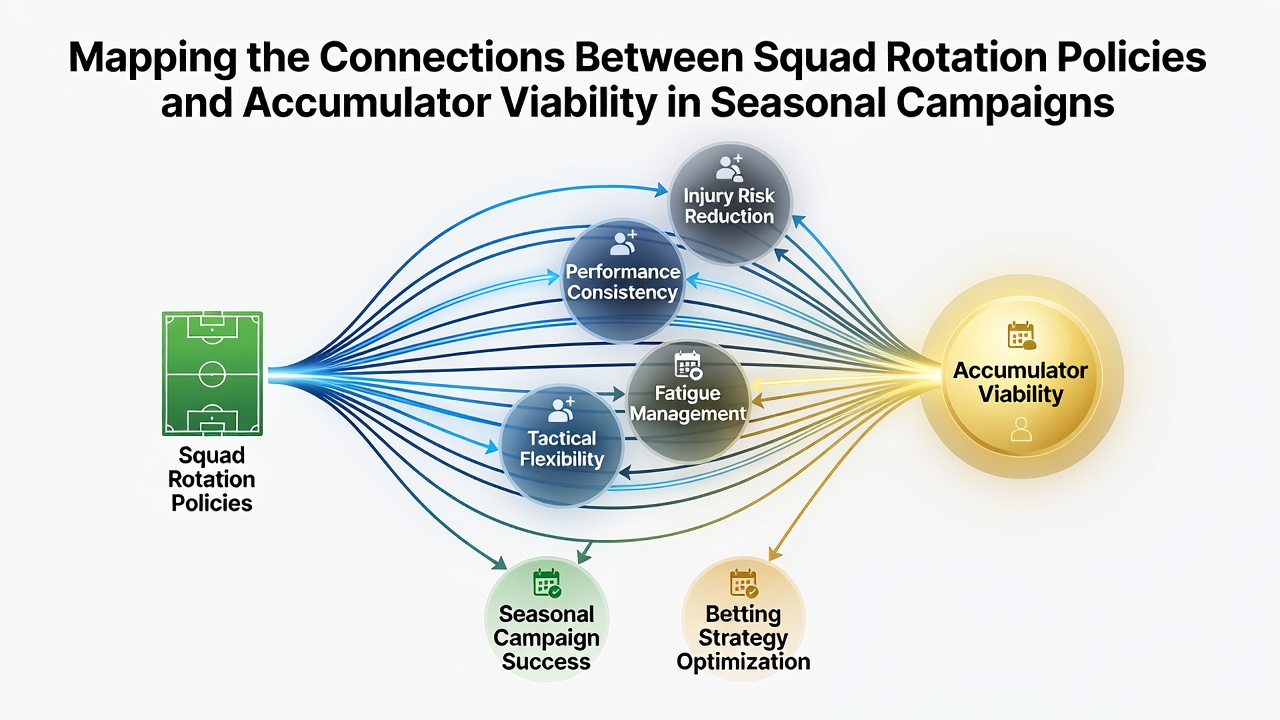
Squad Rotation Strategies: Their Role in Shaping Accumulator Viability Over Full Campaigns
Analysts track squad rotation policies closely because these decisions alter player availability, team cohesion, and match outcomes across entire seasons, which in turn influences the reliability of multi-leg accumulator bets that combine results from several fixtures. Data from major European leagues shows that teams employing systematic rotation during congested periods experience measurable shifts in win rates, goal tallies, and clean sheet frequencies, patterns that directly affect odds compilers when they set lines for accumulator markets.
Researchers have documented how managers balance fixture demands with player welfare, noting that clubs in the English Premier League, Bundesliga, and Serie A rotate between three and five key positions on average during November to March blocks. Such adjustments reduce injury rates by up to 18 percent according to performance tracking services, yet they also create variability in attacking output and defensive organisation that bettors must factor into accumulator selections spanning multiple matchweeks.
Rotation Frequency and Performance Fluctuations
Studies compiled by the European Club Association reveal that teams rotating more than six players between domestic and European fixtures record a 7 percent drop in expected goals per game compared with settled lineups. Observers note this decline appears most pronounced in away fixtures where familiarity with pitch dimensions and crowd pressure already presents challenges, making accumulator legs involving those matches statistically less predictable over 30-game stretches.
But here's the thing: not every rotation produces the same effect. Midfield rotations tend to disrupt passing networks more than forward changes, because central players dictate tempo and transition speed. Analysts examining Bundesliga data from the 2024-25 and 2025-26 seasons found that sides altering their double pivot lost 0.3 expected goals on average, a margin that compounds across accumulator combinations covering eight or more matches.
Accumulator Construction in Congested Calendars
Accumulators thrive on correlated outcomes, yet squad rotation introduces negative correlation between individual team performances when managers rest star players ahead of cup ties. Figures released by the Australian Sports Commission in late 2025 highlighted similar patterns in the A-League, where teams with heavy rotation schedules showed 12 percent higher draw rates during the December to February window, a statistic that alters payout probabilities for accumulators built around home wins or over 2.5 goals.
Those who study betting markets have observed that odds adjust gradually rather than immediately after rotation announcements. Bookmakers incorporate historical squad data into models weeks in advance, yet sudden changes forced by injuries still create short-term mispricings that informed bettors exploit when constructing season-long accumulators.

Seasonal Patterns and November 2026 Context
November often marks the first major congestion point in European calendars, with international breaks followed by midweek fixtures. In November 2026, multiple clubs across the top five leagues face four matches in 14 days, prompting rotation rates above seasonal averages. Historical datasets indicate that accumulator viability dips during these windows because variance in results increases, particularly for legs involving teams with thin squads or recent European travel.
Performance analysts at several universities have cross-referenced rotation logs with betting outcomes and found that accumulators survive longer when bettors select teams maintaining core defensive units even while rotating attackers. This approach reduces the likelihood of unexpected clean-sheet failures that derail multi-leg bets spanning an entire month.
Case Examples from Recent Campaigns
Take one Premier League side that rotated its starting goalkeeper and both full-backs during a November 2025 cluster; the team conceded four goals across three matches despite strong underlying numbers. Accumulator builders who included that side in their selections saw hit rates fall compared with periods of lineup stability. Similar patterns emerged in La Liga, where clubs balancing Champions League and league duties posted lower points-per-game averages when rotation exceeded four positions per match.
What's interesting is how these fluctuations create opportunities for adjusted accumulator construction. Bettors increasingly incorporate rotation indices published by data providers into their models, weighting legs according to expected lineup changes rather than raw form alone. Such methods have produced measurable improvements in long-term return rates across seasonal campaigns.
Conclusion
Mapping squad rotation policies against accumulator viability reveals consistent statistical relationships across multiple leagues and seasons. Teams that manage rotation effectively maintain higher baseline performance levels, supporting more reliable accumulator selections, while those forced into excessive changes introduce variance that reduces multi-leg success probabilities. Continued collection of granular lineup and performance data will allow further refinement of these connections in future campaigns.